technology ·
AI data center backlash threatens GOP grip in Ohio, Texas elections
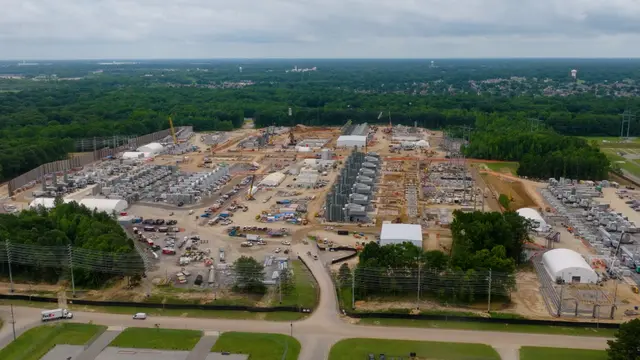
In Pickaway County, Ohio, residents are voicing concerns about EdgeConneX's latest data center, a sentiment that is creating political ripples across battleground states like Texas and Ohio as the…
In Pickaway County, Ohio, residents are voicing concerns about EdgeConneX's latest data center, a sentiment that is creating political ripples across battleground states like Texas and Ohio as the election approaches. This growing focus on the costs and environmental effects of AI data centers may be challenging the Republican party's standing in these key areas, according to experts and voters.
Grassroots movements originating in rural communities, particularly those areas where President Trump secured double-digit victories in both of his presidential runs, are now threatening the rural vote that the GOP has relied upon for decades. The debate is vividly illustrated in communities such as Pickaway County, Ohio, where Trump won by approximately 50 points over former Vice President Kamala Harris in 2024. Sherri Fahringer, a resident of Pickaway County, Ohio, campaigning for county commissioner, commented on the data center situation, stating, “That’s weighing heavily, especially with the Senate races.”
A Pew Research Center study from April indicated that 67 percent of planned projects are slated for rural locales, demonstrating the increasing trend of data center construction in these areas. Fahringer further pointed out that in the Ohio Senate contest, this issue is pushing voters "further left toward" former Senator Sherrod Brown (D) as he campaigns against current Senator Jon Husted (R-Ohio), who has seen his prior support for data centers eroded.
Climate organizations, including the League of Conservation Voters, have heavily criticized Husted regarding his affiliations with data center endeavors; one advertisement even joked that he had "earned" the moniker, "the face of data centers." Furthermore, a memo from the National Republican Senatorial Committee in August, which Axios first obtained, revealed that Brown made his opposition to data centers a "centerpiece of his campaign against Husted" because "it works." This memo also cautioned that "more than any other thing in this race, data centers are the anchor hanging around Husted’s neck." While Trump won Ohio by more than 10 points in 2024, the Republican incumbent has recently lagged behind Brown in recent opinion polls.
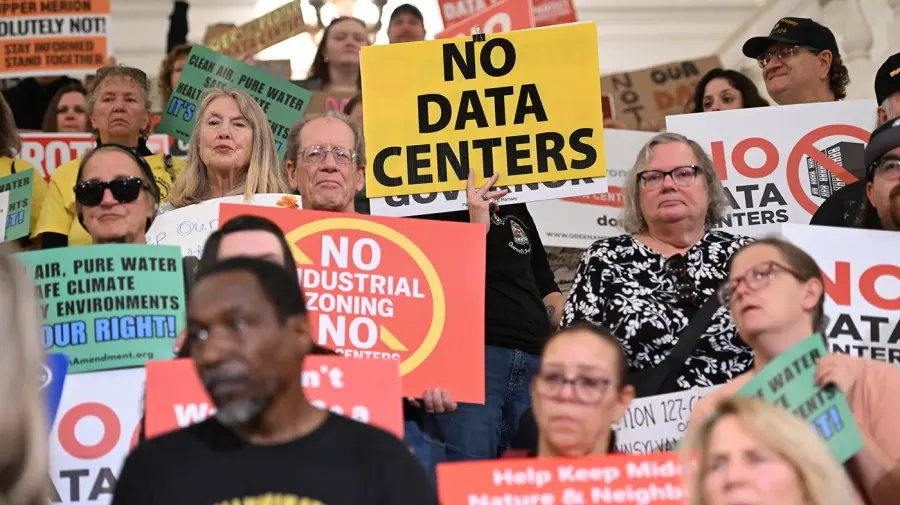
Brendan Steinhauser, a GOP strategist and head of the advocacy group Alliance for Secure AI, noted this dynamic, saying, “It’s really fascinating because I know a lot of people who are opposed to data centers locally, and these are Republicans. Many of them are MAGA Republicans, very conservative areas.” He emphasized that this particular discussion differed from other political topics, observing, “What makes this really powerful is you know this is a bipartisan coalition, and that’s kind of unique.” A poll conducted by Bowling Green State University echoed these findings, showing that opinions on data centers constitute "one area many Ohioans share some common ground," with 75 percent of respondents opposing the building of data centers in their local settings and 78 percent favoring a pause on new construction until more research is completed. In Pickaway County, Fahringer explained that the opposition, which spans both parties, has centered on the anticipated strain on local power grids, potential noise pollution, and the placement of these facilities. She remarked, “They’re being put on former farms right next to homes, very close to schools,” adding, “I think it is upending a lot of people’s typical votes that they would have you know, along party lines.”
The rural electorate holds significant influence in Ohio, where Cleveland.com's analysis, utilizing data from the U.S. Census Bureau, found that all but five of the 88 counties have over 55 percent of their land classified as rural. Steinhauser commented on this, stating, “Rural areas are overwhelmingly Republican and conservative,” but added, “You know, they went for the president by wide margins, but I think that a lot of those voters are concerned on this … they don’t support the president’s position here.”
Trump has consistently defended the construction of data centers, asserting at an Ohio rally that these projects provided a benefit to industry within the Buckeye State. Additionally, he has maintained a hands-off posture regarding the regulation of AI development, of which data centers are a core component.
In Texas, however, Governor Greg Abbott (R), who is seeking re-election and remains a staunch supporter of the president, has recently altered his approach by proposing new limitations on data centers within the state, which include plans to mandate water-efficient technology and eliminate certain tax incentives. This shift comes after Abbott sought to establish Texas as the "epicenter of AI development" in 2025, when he announced new investments from Google into data center projects. Sid Miller (R), the Texas Agriculture Commissioner, informed NewsNation, The Hill’s broadcast partner, that he felt GOP candidates face a risk of losing on Election Day due to data center development in Texas. He specifically criticized Abbott for not adopting a more resolute opposition to these projects, stating, “Basically, we’ve just quit listening to the people, and we’re gonna pay for it this election.”
An October poll from the University of Texas and Texas Politics Project revealed that 66 percent of those in rural areas opposed data center construction in their community, compared to 17 percent who supported it. Steinhauser, who is from Texas, viewed Abbott’s stance on data centers as another "good barometer" for gauging "where Texans are on a lot of issues, especially Republicans." He added that the Texas governor "saw this movement" and consequently made adjustments. Texas possesses the nation's largest rural population, a demographic that Abbott's challenger, Gina Hinojosa (D), aims to appeal to in her bid for the governorship. In the same poll, Hinojosa lagged behind Abbott among rural residents, standing at 28 percent against the incumbent's 68 percent, yet she led overall by a single point, within the poll’s margin of error. Hinojosa has incorporated attacks on Abbott concerning data centers into her campaign, asserting in a New York Times interview that "rural Texas has felt betrayed" by the governor's handling of the AI infrastructure. Steinhauser concluded by remarking, “Millions of voters in Texas alone are motivated by this right now, and it’s going to have an impact on the election.”