technology ·
AI’s real bottleneck is electricity. Who will pay for it?
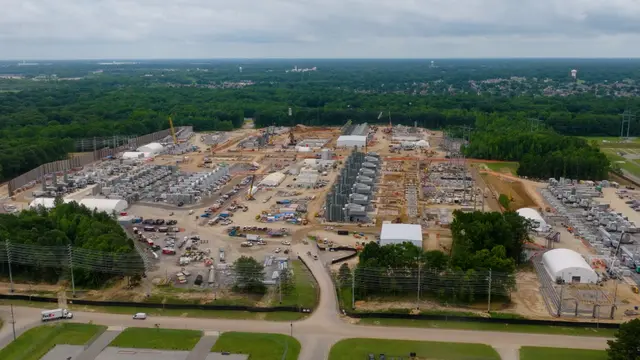
Nuclear power deals are surfacing as major tech firms confront the soaring energy needs of their AI ambitions.
Within a week, two of the world's top three cloud computing providers secured 20-year contracts for nuclear electricity. Amazon secured 690 megawatts from Constellation’s Calvert Cliffs plant in Maryland, including 190 megawatts of extra capacity projected between 2030 and 2032. Google also signed an agreement bringing 890 megawatts of additional nuclear capacity into the United States.
These agreements involve paying for increased output from existing reactors, not constructing new ones. This shift is remarkable after nuclear power faced public skepticism following incidents at Three Mile Island in 1979, Chornobyl in 1986, and Fukushima in 2011.
While the industry initially countered AI’s energy strain with efficiency—like better chips and smarter cooling—these gains were quickly absorbed by larger computational needs. Even when DeepSeek showed a competitive model could train at a lower cost, labs continued planning more extensive training runs.
The International Energy Agency projects global data center electricity demand will more than double to about 945 terawatt-hours by 2030, even with efficiency improvements. Because demand cannot be shrunk, companies are now focusing on securing supply.
However, building a new large reactor takes over a decade, and even reactor upgrades mean timelines stretching to 2027, 2028, or later. This contrasts sharply with AI capital expenditure, where today's chips could be obsolete long before their 20-year contracts expire.
This uncertainty is impacting consumers. In PJM, the grid operator for 13 states and Washington, DC, data center demand accounted for approximately $29.4bn in capacity costs across the last four auctions. Households are already paying higher capacity charges based partly on projected demands from facilities that may never materialize.
In response to growing public concern over rising electricity bills, some states are acting differently, such as Virginia establishing a separate electricity rate class for data centers. Google’s agreement aims to address this by ensuring major consumers provide extra generation capacity.
For Gulf nations planning their own AI expansion, the US experience offers a critical lesson regarding the costs of these arrangements. Qatar’s sovereign fund, for instance, has committed to a $20bn joint venture with Brookfield for AI infrastructure, initially targeting around 300 megawatts.
The Gulf region holds a significant advantage as energy access becomes a key determinant of where computing infrastructure is built. Yet, the scale of these plans demands careful review, as allocating power to AI infrastructure means foregoing other uses, carrying substantial opportunity costs.