technology ·
Indians turn to start-ups to care for ageing parents as young become more mobile
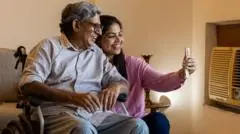
The reliance on new ventures for elder support is growing across India as family structures undergo transformation.
Arindam Bhattacharyya, an advertising executive whose life is based in Jakarta, experienced a sudden wake-up call in 2024. When his parents, residing in Kolkata, India, were visiting him, his father suffered a health emergency. Although Bhattacharyya successfully arranged medical attention for him, the prospect of their return brought forth a question common to many Indians: how can one provide care for aging parents when physical presence is impossible?
Globally, the United Nations Population Fund (UNFPA) forecasts that the number of individuals aged 60 and older will double between 2020 and 2050, reaching 2.1 billion people. India is anticipated to follow this trajectory, with one in five Indians crossing the age of 60 by 2050, representing nearly 21% of the total population. Prior to a few decades ago, discussions regarding elderly care in India were scarce, largely based on the assumption that families would handle the responsibilities, notes the UNFPA, externally. However, this situation is becoming more complex due to factors such as the decline of traditional joint family arrangements. Experts observe that as younger generations relocate from their families and the existing social infrastructure for the elderly remains limited, a widening gap is emerging.
Many view this situation as a significant commercial opportunity. NITI Aayog, a government think-tank, estimates the senior care sector in India is currently valued near $7bn (£5.56bn), projecting swift expansion and presenting substantial prospects for healthcare corporations. Numerous new companies are already entering this space, focusing on various domains including home care, senior living arrangements, and technology-driven services. While the objective of these businesses is to enable older adults to age and live more independently, their clientele are frequently the children of the individuals receiving assistance. Bhattacharyya currently depends on two startups to manage his parents' health monitoring, coordinate their necessary care, and arrange for emergency medical aid. He stated, "These services are a big help but I still monitor everything closely [from Jakarta]."
Organized senior living is experiencing an increase, a trend partly fueled by rising incomes and evolving family dynamics. Nevertheless, some specialists contend that the demand significantly outstrips the available supply. Companies such as Vedaanta Senior Living, Primus Senior Living, Ananta Living, and Manasum Senior Living are developing specialized housing and care facilities, even as traditional property developers show increasing interest. Colliers International Group, a real estate management firm, estimates that the current need for senior living units in India stands at approximately 2 to 2.2 million, while only about 25,000 units are presently on the market.
Anantharam Varayur, a former technology executive, co-founded Manasum Senior Living after observing that many elderly individuals in India led lives with fewer freedoms when compared to their counterparts in the US. In 2015, when he first set up a promotional stall at an event hosted by a large Indian community in the United States, hoping to attract younger Indians familiar with the concept, very few people approached him. He attributed this initial lack of interest to the "stigma" attached to placing older relatives in what are traditionally termed "old age homes" in India. However, circumstances have shifted; his company now operates 900 facilities, predominantly in Bengaluru and Goa, and aims to expand this to 10,000 units by 2030, including a luxury offering. They receive inquiries from seniors whose children reside overseas, couples whose adult children require specialized care, older individuals living alone, and even younger people planning for their future. Yet, a significant number of older people prefer remaining in their own homes or apartments and require support services. Previously, attendants and nurses were viewed merely as supplements to family caregivers; today, they are frequently taking on the primary caregiving responsibilities. What was once a fragmented market, localized and run by small agencies, is now witnessing the emergence of firms providing comprehensive home-care services that utilize technology for scalability. Examples of these include Care24, KITES Senior Care, and Emoha Elder Care Services.
A major hurdle in this caregiving industry, given its inherently sensitive and personal nature, involves both the recruitment and retention of suitable staff. A report published by the ratings firm CareEdge warns, "Failure to adequately train the workforce will lead to an acute shortage of skilled people amid rising demand." The difficulties extend beyond just skills; caregivers must undergo rigorous screening and specialized instruction to assist a demographic vulnerable to various forms of exploitation, including financial scams and fraud. NITI Aayog has acknowledged this problem, underscoring the necessity for a national policy addressing caregiving to cultivate a professional and inclusive ecosystem for care in India.
Entrepreneurs are also exploring avenues to satisfy the social and emotional requirements of clients. In 2022, the investment made by Ratan Tata, former chairman of the Tata Group, into the startup Goodfellows garnered considerable public attention. The company's tagline succinctly describes its mission: "Everything Grandkids Do!" Founder Shantanu Naidu asserts that their intent is not to replace family bonds but rather to fill a gap by providing spirited, empathetic youth companions for elderly clients, allowing for shared quality time or simply assisting with technology. While Naidu's venture focuses on leveraging human emotional intelligence, other entrepreneurs are employing artificial intelligence to solve tangible problems. In Bengaluru, entities like Kubo Care and NoBlink.ai integrate AI-powered monitoring with radar devices mounted within homes to track movement, thereby alerting emergency services in the event of a fall or fainting spell. Prajith Nair, who co-founded NoBlink.ai, stated their objective is to "build at scale so that it is available at economical and affordable cost." He noted that the company currently supplies these systems to senior living projects for 13,500 rupees ($141.74; £106.42) per device, alongside a monthly monitoring fee starting at just 50 rupees per room, which is one-tenth the cost of comparable products in other countries. Despite numerous startups striving for competitive pricing, affordability remains a substantial worry.
Varayur points out that the cost to acquire a one-bedroom-hall-kitchen unit within a senior living project can reach 6m rupees, and this figure does not include subsequent payments for maintenance and food, with the total cost fluctuating based on the selected amenities. Demand remains high, but these options are financially inaccessible to the majority of older Indians. NITI Aayog reports that 78% of India's elderly population lacks a pension, which severely restricts their capacity to afford these services. Furthermore, households containing at least one elderly person report a lower average monthly per capita income of approximately 3,568 rupees, compared to 4,098 rupees for households without an elderly member. Consequently, experts caution that startups cannot serve as the sole remedy.
Neighboring nations have adopted different approaches to manage their aging populations. Japan has tackled the challenges associated with its older demographic by implementing a combination of public nursing facilities, long-term care insurance, community-based support systems, and social exchange programs. China, India's neighbor, has spent years confronting its aging population by enacting measures designed to encourage younger people to marry and increase birth rates as its labor force contracts. Earlier this year, Kerala became the first Indian state to enact a landmark law specifically for senior citizens, focusing on their rights to affordable care, legal assistance, access to digital resources, and secure public areas. While industry specialists believe India still retains time before reaching a critical demographic juncture, the care for millions more elderly citizens will necessitate well-developed support structures. A robust network of businesses catering to senior citizens could play a vital role in bridging this gap.