technology ·
The Indian workers filming their work to train AI
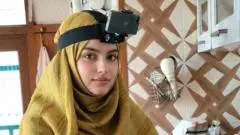
A textile worker in Bangalore, Mohammed Arman, has begun wearing a head-mounted camera while performing his decade-long task of stitching and cutting garments. For him, this extra compensation for doing the exact same work is vital for supporting his family in Bihar.
This practice is part of a larger global trend where countless individuals are compensated to film their daily activities. Local firms gather this human-generated video, which is subsequently sold to technology corporations and research groups.
These companies utilize the captured footage to instruct artificial intelligence, particularly physical AI designed to operate real-world machinery like robots. Rashdan Technologies handles the collection and processing of this data.
Shahil Baig, the co-founder and CEO of Rashdan Technologies, notes the demand from various AI labs for specific data, including tasks from agriculture to small business crafts. His firm offers between $5 and $10 (£3.74; £7.47) for eight to ten hours of recorded labor.
While initial setups often focus on recording only hands, clients are now requesting more comprehensive coverage, sometimes requiring four to six cameras mounted around a person's head.
Manish Agarwal, founder of Humyn Labs, asserts that robots cannot be properly trained solely within computer simulations; they need real-world data. He points out the lack of existing datasets detailing embodied human actions, such as applying precise grip force to different materials.
Humyn Labs currently employs 96,000 data collectors across Latin America and Southeast Asia, filtering and labeling the resulting video content for clients.
However, some experts caution against the trajectory of this development. Bino Paul, a senior professor at TISS in Mumbai, warns that if machines begin automating jobs, there may be little recourse for workers once the process has advanced too far.
Jolly Arifur, a science teacher in Guntakal, Anantapur, exemplifies the flexible side of this work, earning two to three dollars per hour by recording domestic chores like cooking and scrubbing around her teaching schedule.